
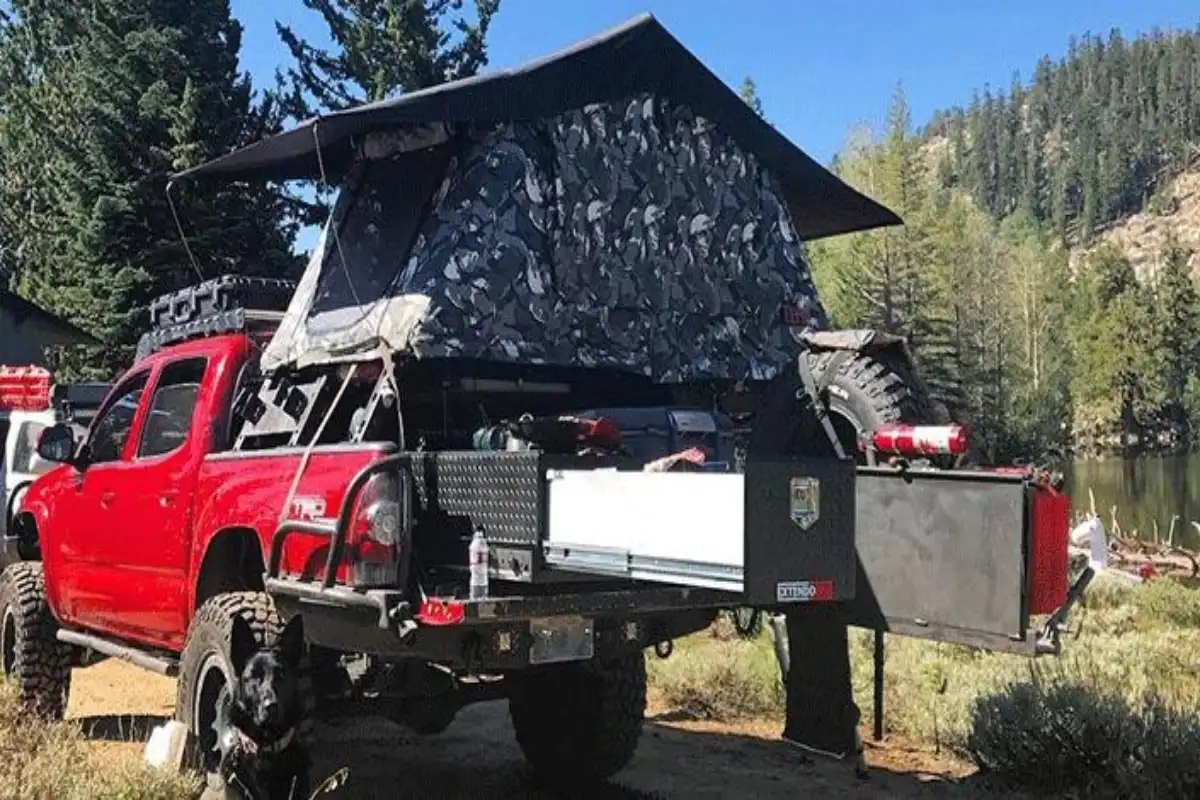
Truck bed extensions give fleet vehicles more usable space without moving up to a larger truck class. For fleet managers, that can mean fewer vehicles, fewer return trips, and crews who reach their gear faster.
Not every extension works the same way, though. Some simply lengthen the cargo floor, while others change how crews load, reach, and unload equipment. Knowing the difference helps you spend capital on the option that actually moves the needle.
Table of Contents
What Truck Bed Extensions Actually Do
At the simplest level, truck bed extensions add length or access to a standard cargo bed. A short-bed pickup might gain room for long ladders, pipe, or lumber. A crew cab, which often trades bed length for seating, can win back some of that lost space. In each case, the goal is to carry more of the right gear on the vehicle you already own.
That last point matters for fleet budgets. Stepping up to a longer wheelbase or a dedicated service body raises acquisition, fuel, and maintenance costs. A well-chosen extension can close the capacity gap at a fraction of that expense. It also lets you keep a standardized truck model across the fleet while still adapting each unit to its job.
The same idea applies beyond pickups. Service bodies, cargo vans, SUVs, and even trailers can gain working room when the floor itself becomes accessible. That flexibility makes extensions a practical tool for mixed fleets.
Three Common Approaches to Extending a Truck Bed
Most truck bed extensions fall into three broad categories. Each one solves a different problem, so it helps to see them side by side.
- Tailgate extenders: These flip out over a lowered tailgate and create a cage or barrier. They help with long, light loads but do little for heavy equipment or organization.
- Hitch-mounted extenders: These slide into the receiver and support the far end of long materials. They work well for occasional hauling, although they occupy the hitch while in use.
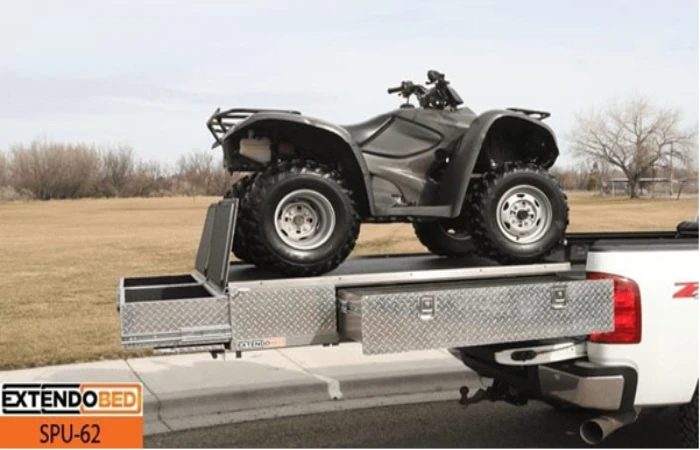
- Slideout platforms: These roll the cargo floor itself out past the rear bumper. Crews get ground-level access to heavy gear, and the vehicle carries a complete storage system on board.
The first two types extend length. Only a slideout changes how people interact with the load every single day.
With a slideout, the base slideout serves as the foundation. Everything built on top of it is the carrier. That carrier might include trays, drawers, shelves, mounting walls, day boxes, or any combination. A look at purpose-built slideout units for trucks, vans, and SUVs shows how far sizes and capacities can range.
Usable Capacity Versus Rated Payload
Many buyers miss this point. Truck bed extensions improve usable capacity, meaning the space and access you have for gear. They do not raise the payload rating the manufacturer assigned to the vehicle. Gross vehicle weight rating, axle ratings, and tire limits still set the ceiling.
So the real question is how efficiently an extension uses the payload you already have. A slideout should carry heavy loads without sagging, binding, or requiring operators to balance weight evenly. It should also keep cargo secure in transit. Federal cargo securement rules from FMCSA apply to commercial vehicles hauling equipment. Commercial-grade slideouts commonly range from 1,000 to 3,000 pounds, and that number should match your heaviest realistic load.
The extension’s own weight also counts against payload. A heavy steel unit makes sense when crews haul dense equipment like generators or rescue tools. Weight-sensitive fleets, on the other hand, often benefit from aluminum construction that frees up pounds for gear.
How Truck Bed Extensions Cut Strain and Save Time
Access is the hidden capacity gain. When gear sits deep in a standard bed, crews climb in, kneel, or stretch across the rails. Those awkward postures add up over hundreds of trips a year. OSHA’s ergonomics guidance lists reaching, bending, and heavy lifting among the key risk factors for musculoskeletal injuries.
Truck bed extensions that slide the entire cargo floor out solve this problem at the source. Operators stand at the tailgate and pull gear toward them instead of reaching for it. That saves minutes on every stop and lowers the chance of a strain injury that sidelines a crew member. For especially heavy loads, a push-button Power Drive system extends and retracts the unit with no manual effort at all.
Matching the Extension to the Work
A fire department, a telecom crew, and a SWAT team all need more room from their vehicles. Still, they need very different things. These questions help narrow the field before you compare truck bed extensions.
- What is the heaviest load this vehicle will carry on a typical day?
- Does the crew need open floor space, compartmentalized storage, or both?
- Will the unit move between vehicles, or stay with one truck for its whole service life?
- How many identical vehicles need the same setup?
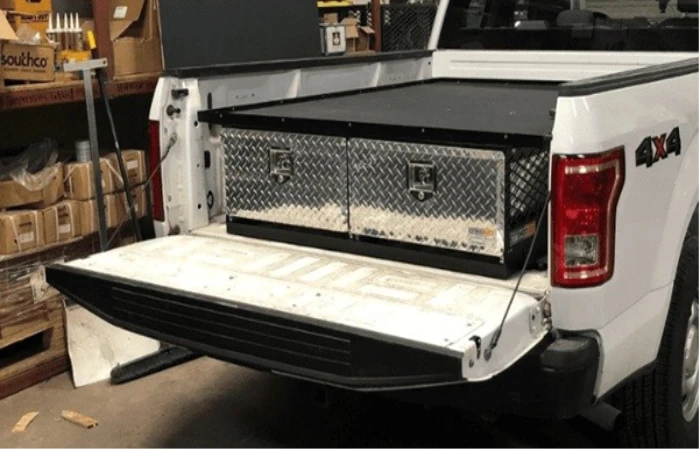
Your answers shape the carrier more than the base. One unit might need a simple open tray for bulky equipment. Another might need locking drawers for tools, a mounting wall for radios, and a whiteboard for incident notes. Fleets that standardize the base slideout across vehicles can still tailor each carrier to the crew using it.
Standardization also pays off in purchasing and maintenance. Crews who move between trucks find gear in the same place every time. Procurement teams can plan orders in batches, which makes lead times easier to forecast and budget around.
Building a Smarter Extension With Extendobed
The best truck bed extensions outlast the trucks they ride in. That takes robust construction sized to the vehicle and hardware that holds up to daily cycles. It also takes a partner who sticks around after delivery.
Extendobed built and patented the first truck bed slideout in 1987, and that experience shows in every unit. Our slideouts extend past 100%, often reaching 110% or more, so gear clears the taillights. They carry heavy loads without requiring even weight distribution. We also custom-build each one around the vehicle and the job it serves. Our guide to choosing a slide out for heavy-duty fleets compares extension, capacity, and construction in more depth.
That durability is why many fleets treat an Extendobed as a long-term investment rather than a recurring purchase. We value the relationships that come with it, too. If your crews are working around the limits of a standard bed, reach out to our team and tell us what your vehicles need to carry. We would be glad to help you map out a setup that fits the work.