
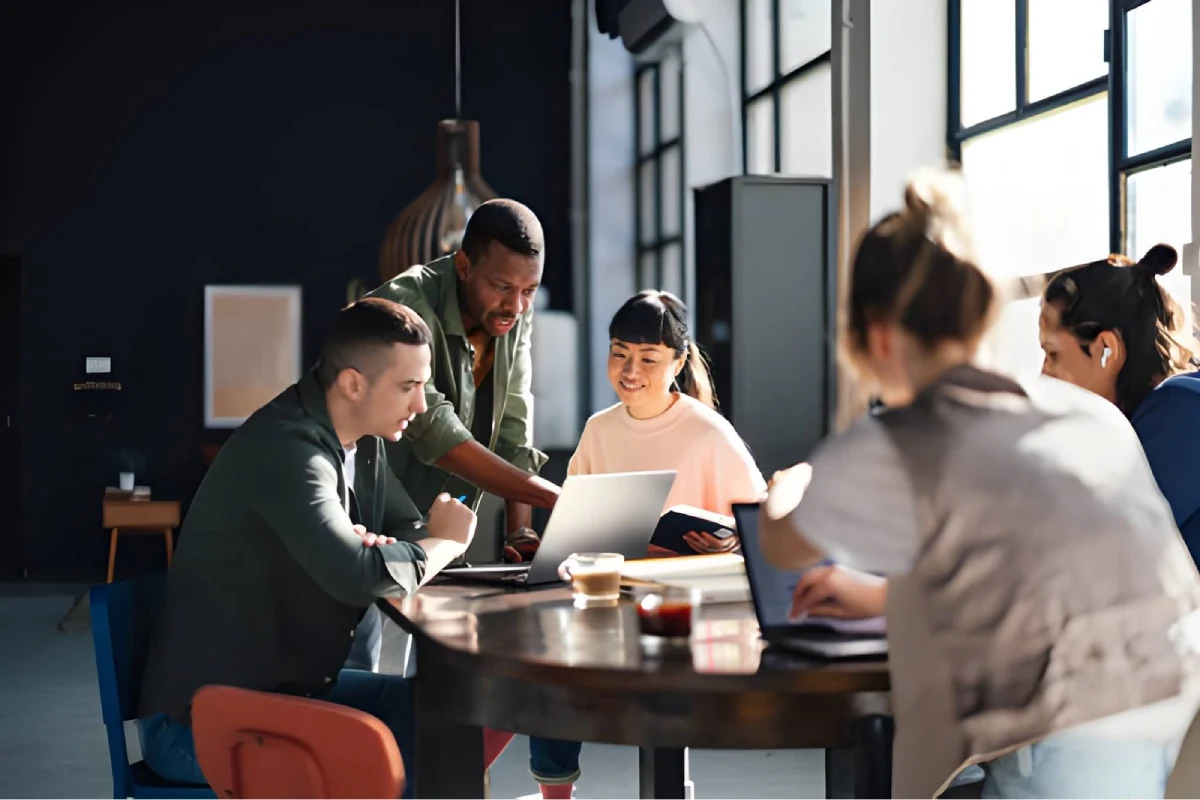
The office has changed dramatically over the past century. Workers once sat in long rows of desks under the watchful eye of supervisors. Later came private offices for managers and partitioned workstations for everyone else. Then walls came down as open-plan offices promised collaboration and creativity. More recently, hybrid work has reshaped how businesses think about workplaces altogether.
Each shift reflected changing ideas about how people work best. Understanding that history helps explain why today’s offices look so different, and what it means for productivity. The move from cubicles to open plan offices, and beyond, shows how workplace design continues to evolve alongside technology, culture and employee expectations.
Table of Contents
The early office: efficiency above all
In the early twentieth century, office design was heavily influenced by industrial thinking. Large rooms filled with rows of desks allowed managers to oversee workers and maximise efficiency. Tasks were often repetitive, and the environment focused on control and productivity rather than comfort or collaboration. Privacy was minimal, and individual expression was rarely considered.
The rise of cubicles
In the mid to late twentieth century, office designers sought ways to give workers more privacy and flexibility. Partitioned workstations, commonly known as cubicles, became widespread.
Cubicles offered personal space, reduced visual distractions and allowed companies to fit more employees into large floor plates. Workers could personalise their spaces with photos and belongings.
However, cubicles also became associated with isolation and monotony. Long rows of identical partitions could feel impersonal, and communication between colleagues was sometimes limited.
The open-plan revolution
By the early twenty-first century, many businesses embraced open-plan offices. Removing partitions and private offices was intended to encourage collaboration, transparency and spontaneous conversations. Open-plan layouts could also reduce costs by fitting more people into less space.
Technology companies and creative industries popularised the trend, often pairing open spaces with colourful breakout zones, communal kitchens and casual meeting areas.
Yet open-plan offices brought their own challenges. Noise and distractions made concentration difficult for some workers. Lack of privacy could increase stress, and some employees found themselves wearing headphones all day or booking meeting rooms simply to focus. It became clear that one design doesn’t suit every task or every person.
Activity-based working and the hybrid era
In response, many organisations adopted activity-based working. Rather than assigning everyone a permanent desk, these workplaces offer a range of spaces designed for different activities. Quiet zones support focused work. Collaboration spaces encourage teamwork. Phone booths provide privacy for calls. Lounge areas support informal meetings and social interaction. Employees choose the space that best suits the task at hand. This approach recognises that productivity depends on matching environments to activities.
The widespread adoption of remote and hybrid work has transformed the purpose of the office once again. Many employees now split their time between home and the workplace. As a result, offices are increasingly designed as destinations for collaboration, connection and culture rather than places for individual desk work alone.
Businesses are investing in meeting rooms equipped for hybrid collaboration, flexible spaces that can be reconfigured easily and amenities that make the office an attractive place to visit. Hot-desking and desk booking systems help organisations use space efficiently while supporting flexible work patterns.
What drives productivity today
Modern office design focuses on supporting people rather than controlling them. Several factors influence productivity. Choice allows employees to select spaces suited to different tasks. Comfort includes ergonomic furniture, good lighting, appropriate temperatures and acoustic control. Collaboration spaces support teamwork and creativity, while quiet areas protect concentration.
Wellbeing has become a major consideration. Natural light, plants, access to outdoor areas and comfortable break spaces can improve mood and reduce stress. Technology also plays a big part. Reliable internet, video conferencing systems and easy-to-use collaboration tools help teams work effectively, whether in the office or remotely.
The office will continue to evolve as technology and working habits change. Future workplaces may become even more flexible, with spaces that adapt to changing needs throughout the day. Sustainability, health and inclusivity are likely to remain key priorities.
There’s no single perfect office design. The most productive workplaces are those designed around how people actually work, offering flexibility, comfort and spaces that support both collaboration and focus. As businesses continue to rethink the role of the office, one thing remains clear: when workplaces support people, productivity follows.