
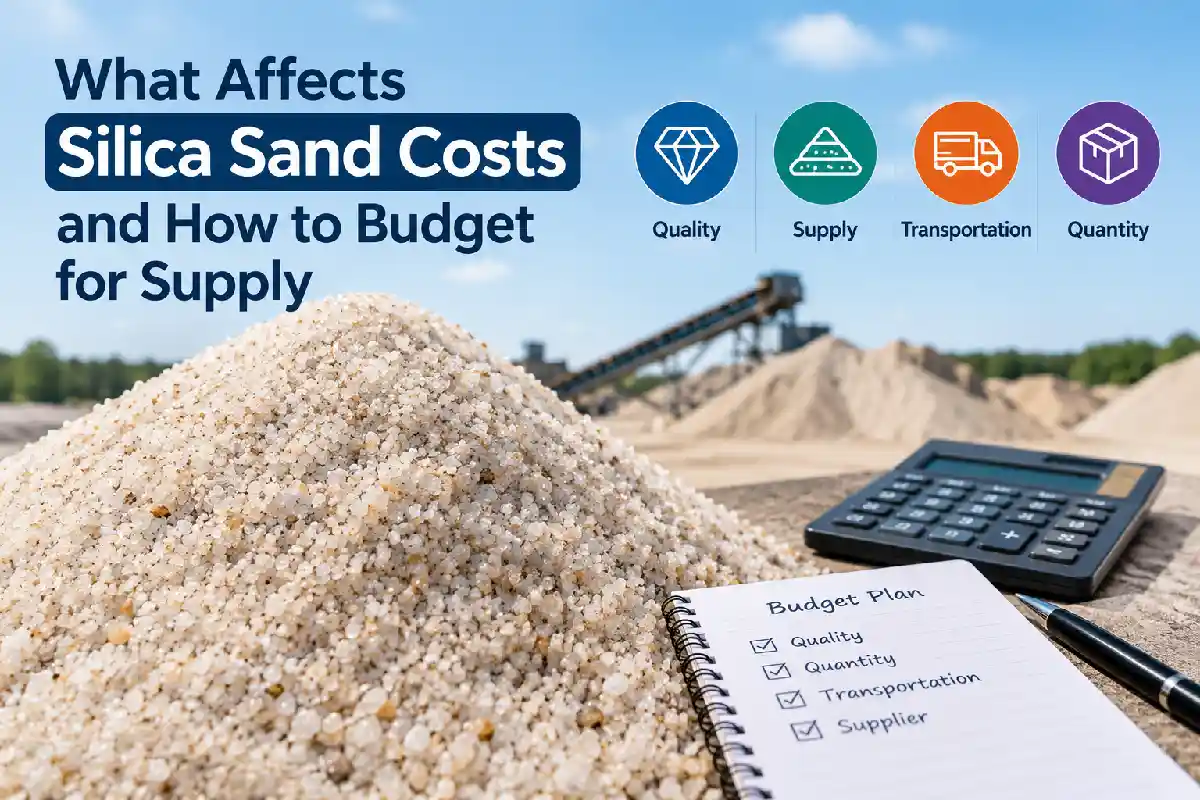
Comparing silica sand on per-ton price alone can leave important costs out of the budget. A plant-gate quote may exclude freight and handling, and apparently similar offers may cover different grades. Confirm what each price includes and which specification it meets. Total delivered cost is the figure your budget has to live with.
Table of Contents
How specs and processing set the base price
Natural silica sand differs from general fill sand and gravel. It is mined for silica content and grain shape, then sized for a defined use. Fill sand can vary from load to load and still work for bulk fill. Industrial sand can’t work that way.
Chemical purity requirements can affect source selection and processing. Ask the supplier to quote against your actual limits for silica content and impurities, not a broad description such as ‘high purity.’ Buying a stricter grade than the process needs may add unnecessary expense.
Grain-size requirements add another layer. Compare the full specified distribution, including fines and oversize limits, so quotes cover equivalent products. Washing, screening, and drying can add costs, but the required processing depends on the application. Clarify whether your process needs dry material or can accept a stated moisture range. Avoid paying for drying that provides no benefit to the job.
Tight specs cost more.
Why distance and outside demand move prices
Sand is heavy and cheap at the plant gate. Freight changes that fast. Short hauls keep options open, while a longer haul can add more to your invoice than the sand itself. That gap widens with diesel shifts and route limits. Buyers often focus on a low F.O.B. price even when a closer source with a higher plant price would cost less delivered.
Delivery method matters too. Bulk pneumatic trailers suit dry sand and high-volume users with silos on site. Bagged sand suits small or scattered use, but you take on bags and pallets as well as the handling labor. There’s no universal winner. Your volume and available storage determine which delivery option costs less for you.
Outside demand can pull tons away from your region. Hydraulic fracturing uses large volumes of frac sand, so a drilling upturn can tighten local supply and lift prices for other industrial users. Regional permitting for mining adds another layer. Compliance costs differ by area, and they are included in the plant price you are quoted. Ask regional suppliers how seasonal demand affects their production slots and delivery capacity rather than assuming prices follow the same calendar everywhere.
How to budget and source with fewer surprises
Base your budget on usable tons. Moisture and fines reduce what you actually place or process, so ask whether the price is on a dry or as-shipped basis and how yield is measured. When you compare bids for natural silica sand, start with qualified regional sources and review where to buy silica sand for grade options that fit your spec. That early check keeps you from pricing a grade you can’t use.
Build the budget line by line. Include product price and freight as separate lines, then allow for unloading time and storage upkeep. Add packaging waste and handling labor if you buy bagged. Don’t fold those costs into one blended rate where overruns can hide. A simple budget sheet is easier to track than memory when loads and tickets pile up.
Minimum order size can force your hand. A supplier may set a full-trailer minimum that exceeds a small job’s need. Crews sometimes order extra just to meet the minimum, then pay to store it or move it twice. If you can’t take bulk or store on site, plan for smaller loads and higher per-ton freight. It often won’t match a bulk rate, and your budget should reflect that gap.
Consumption rarely runs flat. Breakage and wash loss can push use above plan. Hold a contingency for overuse and freight shifts. That cushion keeps one bad week from breaking the job budget.
How contracts and timing reduce budget risk
Spot buys work for one-off needs, but they don’t suit steady use. A quarterly or annual agreement with a nearby supplier can steady supply and cut repeat bidding. Price it on total delivered cost, not plant price alone, and spell out the grade requirements alongside delivery windows.
Agreements don’t remove all risk. Fuel surcharges and trucking shortages can still push costs up. Ask how surcharges are set and when they can change. Get two or three regional bids even if you prefer one supplier. That comparison shows whether your rate tracks the local market or has drifted away from it.
Use a rolling consumption forecast to schedule replenishment before stock reaches its minimum level. Balance a buffer against storage capacity, cash tied up in inventory, and material condition. Early orders may reduce the need for emergency deliveries, but they do not guarantee a lower price. Review actual consumption and delivery performance regularly so the next budget reflects operating experience.
Good budgets account for sand as a delivered service. Match the grade to the task and count every handling step through placement. Keep hauls short where you can, and plan the last mile too. Review your landed usable-ton cost against invoices and receiving records so product, freight, and handling changes become visible before they distort the budget.