


If you hold Adani Wilmar shares or are thinking about buying them now, the real question isn’t “What’s the price today?”—it’s whether the risk–reward still makes sense after the Adani Group’s exit and a year of underperformance. As of mid‑February 2026, the Adani Wilmar share (AWL Agri Business Ltd) trades around the low ₹200s, down roughly 20% over the last year, with a market cap near ₹26,500 crore and a PE in the high‑20s.
Adani Wilmar share (AWL Agri Business Ltd) represents equity ownership in India’s largest edible‑oil processor and a growing foods and FMCG business. Investors track the AWL share to gain exposure to India’s rising consumption of cooking oils, staples, and packaged foods.
This guide focuses on helping you understand what that actually means for your money over the next few years, not on giving tips or one‑line “buy” calls. For the latest live price and ratios, always refer to your preferred broker or stock‑data platform; this article focuses on the underlying business, risks and valuation context.
Table of Contents
Quick Verdict– Is Adani Wilmar Share Worth Buying Now?
Where AWL Stands Today
As of 17–18 February 2026, Adani Wilmar share price is about ₹202–₹203 per share, with a 52‑week range roughly between ₹199 and ₹291. The stock has fallen about 19–21% over the last six to twelve months, even as the company remains profitable and debt‑light.
On basic valuation, AWL trades near 27–31 times recent earnings depending on the source and price reference, which is not “dirt cheap” given its growth and risk profile. Some intrinsic‑value models even show the stock trading at a large premium—Smart‑Investing, for example, estimates intrinsic value near ₹44 per share and classifies AWL as trading at a steep premium to its fair value based on historical models.
In simple terms: the business fundamentals have improved, but the market is still debating whether today’s price offers enough margin of safety.
Who Might Consider Buying or Holding AWL
-
Long‑term, higher‑risk investors (5+ years): Might consider staggered, small exposure if they believe AWL can keep scaling foods/FMCG and specialty chemicals under Wilmar’s leadership, and are comfortable with commodity and sector risks.
-
3–5‑year investors: Should be selective; current valuations plus sector volatility mean you need a strong conviction in growth drivers and a high tolerance for drawdowns.
-
Very conservative or income‑focused investors: May prefer to avoid AWL for now; dividend yield is negligible and earnings are still evolving, while price remains volatile.
This article is designed to help you decide which of these buckets you fall into—and what that implies for your AWL position.
Adani Wilmar at a Glance (Business & Ownership)
From Adani Wilmar to AWL Agri Business
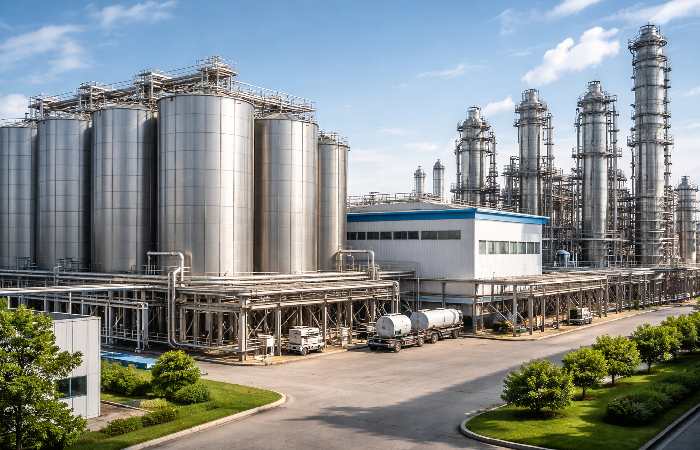
AWL Agri Business, formerly Adani Wilmar, is an Indian multinational food and beverage conglomerate based in Ahmedabad. It was founded in 1999 as a joint venture between Adani Enterprises and Singapore‑based Wilmar International and has grown into India’s largest processor of edible oils, anchored by the Fortune brand.
In 2025, the group completed a major ownership reshuffle: Adani Enterprises sold its remaining stake via block deals, fully exiting the joint venture. With this, Wilmar International became the sole promoter, holding around 57% of the company and giving AWL a cleaner multinational ownership profile.
The full exit and stake‑sale timeline are summarised in GoodReturns’ coverage of Adani Group completing its exit from Adani Wilmar.
What AWL Actually Sells
AWL sits at the intersection of edible oils, foods, FMCG, and industrial inputs:
-
Branded edible oils under Fortune and other labels (sunflower, soybean, rice bran, mustard, blended oils).
-
Food staples such as wheat flour (atta), rice, pulses, sugar, and ready‑to‑cook products.
-
FMCG and value‑added food products, where management wants a larger share of total revenues by FY27 and beyond.
-
Industrial essentials and specialty chemicals, including oleochemicals and castor‑based products, where margins can be higher but volumes more cyclical.
This mix gives AWL both scale (in commoditized edible oils) and optionality (in higher‑margin foods and specialty chemicals), but also exposes it to commodity swings.
Ownership Shift – Adani Group Exit, Wilmar as Sole Promoter
Adani Enterprises gradually pared its stake and, by November 2025, sold the remaining 7% holding via block deals, taking total realisation to around ₹15,700 crore and fully exiting AWL. With Adani’s exit, Wilmar International is now the sole promoter with roughly 57% stake, and long‑term institutional investors such as GIC are reported to be increasing exposure as the structure stabilises.
In the short term, block deals and promoter exits can create selling pressure and volatility in the share price. Over the longer term, a stable, globally experienced promoter can be a positive—provided the market gains confidence in strategy, governance, and execution under the new setup.
Fundamentals Check – Growth, Margins, and Debt

Revenue and Profit Trends
Recent numbers show both scale and volatility:
-
AWL’s 12‑month revenue is in the ₹60,000–₹70,000 crore range, reflecting its large presence in edible oils and staples.
- You can see AWL’s latest consolidated financials, key ratios, and five‑year trends on the AWL Agri Business page on Screener.
-
In FY25, AWL posted its highest‑ever quarterly revenue of about ₹16,860 crore in Q3, up over 31% year‑on‑year with around 5% volume growth.
-
Over the last five years, revenue has grown at a mid‑teens CAGR (about 14–15%), while net profit has grown at a similar or slightly higher CAGR.
If you are new to reading company numbers, our guide on fundamental analysis walks through these metrics in simple terms.
Profitability has been improving from a low base:
-
Operating profit margins in FY25 are reported near 3.9%, up from about 2.1% in FY24.
-
Net profit margins rose from roughly 0.3% in FY24 to about 1.8% in FY25, with net profit growing several‑fold year‑on‑year.
These numbers suggest that AWL has been moving out of a margin trough, but its margins remain thin compared to some FMCG peers, and still sensitive to input costs.
Margins, ROE/ROCE, and Cash Flows
Tools such as Equitymaster and Screener show:
-
Operating margins improving but still in the low single digits, reflecting the commodity‑heavy nature of edible oils and bulk staples.
-
Net profit increasing sharply in FY25, but on relatively modest net‑margin percentages, which can compress quickly if conditions turn.
-
Over five years, net profit CAGR is healthy, but with noticeable year‑to‑year swings tied to global oil prices and demand.
Cash‑flow analysis indicates that AWL can generate significant operating cash flows in good years, though free cash flows depend on capex requirements to expand foods/FMCG and processing capacity. That mix is typical of large agri‑food players.
Is AWL Debt Free?
On leverage, AWL stands out positively. In FY25, its debt‑to‑equity ratio is reported at around 0.0, similar to FY24, which means the company is effectively debt‑free on a net basis.
Screener‑type tools also classify AWL as debt‑free or very low‑debt, which reduces financial risk compared with heavily leveraged commodity players. So, while AWL is not risk‑free overall, its balance sheet is not the main source of risk; sector cycles and execution are.
Is Adani Wilmar a Good Long‑Term Buy?
Current Valuation Multiples vs History and Peers
Recent quotes show AWL trading around:
-
Price near ₹202–₹203.
-
Market cap about ₹26,500 crore.
-
PE ratio roughly 27–30x, depending on trailing earnings reference.
Compared to broader FMCG names, a high‑20s PE is not extreme, but many FMCG majors also offer stronger margins, established brands across categories, and more stable earnings. Versus more commodity‑driven edible‑oil peers, AWL’s valuation can look rich because its margins are still in transition and the foods/FMCG story is partly “future‑priced.”
Fair Value and Margin of Safety
One example of an intrinsic‑value model comes from Smart‑Investing’s intrinsic value and fundamental analysis for Adani Wilmar.
One intrinsic‑value tool estimates AWL’s intrinsic value around ₹44 per share and fair value (on a median EV/EBITDA model) below that level, implying that the current price trades at a premium of over 300% to its modelled intrinsic value. That doesn’t automatically make AWL “bad,” but it suggests the market is pricing in a lot of future growth and margin improvement. This is just one intrinsic‑value model; other approaches that use different assumptions or multiples can arrive at higher or lower fair values, so no single estimate should be treated as the truth.
Viewed from a simpler PE angle, AWL recently traded at about 31x earnings when the CMP was near ₹256, and even after a decline toward the low ₹200s it still sits in the high‑20s PE band—closer to fair‑to‑expensive versus many FMCG or edible‑oil peers. In plain terms, AWL is not obviously undervalued; it looks more like fairly valued to rich, depending on which assumptions you accept. For retail investors, that means the margin of safety is not huge at today’s price, especially if growth disappoints or sector conditions worsen.
What Analysts Are Pricing In
Available forecasts and market commentary point to:
-
1‑year price targets clustering roughly in the ₹310–₹335 band, with some high‑end estimates up to about ₹425, implying potential upside from current levels if growth plays out.
-
Long‑term ranges out to 2030 suggesting the stock could trade anywhere between the low ₹400s and the ₹2,000+ zone in optimistic scenarios, which is a wide band that highlights uncertainty.
These target ranges assume:
-
Continued revenue growth in foods/FMCG.
-
Stable to improving margins despite commodity volatility.
-
Execution of distribution and rural expansion plans.
They are not guarantees; they are model outputs that can change quickly.
Outlook and Price Targets (2026–2030)
Key assumptions behind these scenarios:
– Margin improvement from recent FY25 levels, not deterioration.
– A rising share of foods/FMCG in revenue mix over the next few years.
– Mid‑teens or better earnings growth sustained through the late 2020s.
1‑Year Price Target Range and Key Drivers
Short‑term (around 1 year), current analyst and forecast sites imply:
-
Average target zone: roughly ₹310–₹335, with some bull‑case targets around ₹425.
-
From the current ~₹200 level, that suggests theoretical upside, but only if earnings growth and margin improvements meet or exceed expectations.
Key drivers over the next year include:
-
Execution of AWL’s plan to increase the share of foods/FMCG in total sales and expand rural coverage to tens of thousands of towns.
-
Stability in edible‑oil margins despite global commodity movements.
-
Market perception of the new ownership structure and promoter stability under Wilmar.
Long‑Term Scenarios to 2030
Outlook and Price Targets (2026–2030)
Key assumptions behind these scenarios:
-
Margin improvement from recent FY25 levels, not deterioration.
-
A rising share of foods/FMCG in the revenue mix over the next few years.
-
Mid‑teens or better earnings growth sustained through the late 2020s.
1‑Year Price Target Range and Key Drivers
Short‑term (around 1 year), current analyst and forecast sites imply an average target zone roughly between ₹310 and ₹335, with some bull‑case estimates around ₹425. From the current ~₹200 level, that suggests theoretical upside, but only if earnings growth and margin improvements meet or exceed expectations.
Key drivers over the next year include:
-
Execution of AWL’s plan to increase the share of foods/FMCG in total sales and expand rural coverage to tens of thousands of towns.
-
Stability in edible‑oil margins despite global commodity movements.
-
Market perception of the new ownership structure and promoter stability under Wilmar.
Long‑Term Scenarios to 2030
Long‑term projections out to 2030 are more speculative. Some forecast content mentions ranges such as ₹412 to ₹2,063 per share, reflecting widely different assumptions about earnings growth, margin expansion, and valuation multiples. Rather than fixating on any single number, it’s more useful to think in scenarios:
-
Optimistic scenario: Foods/FMCG become a much larger share of sales, specialty chemicals scale profitably, margins expand materially, and AWL secures a stronger FMCG‑style rating from the market.
-
Base case: Gradual mix improvement and steady growth, but margins and valuation remain constrained by commodity exposure, so returns are moderate.
-
Cautious scenario: Competition and commodity risk limit margin expansion; valuations compress, and returns are driven mainly by earnings, not by multiple re‑rating.
What Must Go Right (and Wrong) for These Targets
To justify the upper end of long‑term targets, AWL would likely need:
-
Sustained double‑digit revenue growth driven by foods/FMCG and industrial value‑added products.
-
Margin expansion beyond current low single digits, with more resilient profitability across cycles.
-
Strong execution on rural expansion and direct‑retail reach (management targets include 50,000 towns and 1 million outlets over a few years).
On the flip side, downside risks include:
-
Prolonged margin pressure from raw‑material prices.
-
Slower than expected earnings growth versus the broader market.
-
Any negative surprises linked to governance, strategy shifts, or global factors affecting Wilmar and the broader edible‑oil ecosystem.
Why Is Adani Wilmar Falling? Key Risks You Can’t Ignore
Sector and Commodity Risks
AWL is tightly linked to global edible‑oil markets and agri‑commodities. Factors like palm‑oil prices, crop yields, trade policies, and freight can all affect input costs and margins. Even if AWL executes well operationally, unfavourable commodity cycles can compress profits and trigger share‑price declines.
Additionally, AWL has exposure to industrial essentials and specialty chemicals where demand can be cyclical; recent reports show that while some segments grew revenue, volumes in certain industrial categories declined due to muted demand.
Competitive Pressure in FMCG and Foods
In consumer foods and FMCG, AWL competes not just with other edible‑oil players but also with well‑entrenched giants like HUL and ITC in adjacent categories, as well as strong regional and private‑label brands. Gaining and defending share in packaged foods requires sustained brand investment, innovation, and distribution, all of which cost money and take time.
When the market sees slower‑than‑expected progress on the foods/FMCG story, it can question the premium valuation and re‑rate the stock downward.
Company‑Specific Concerns
Recent commentary highlights a few AWL‑specific issues:
-
Earnings growth may lag broader market expectations in some periods, even if long‑term potential is intact.
-
The Adani exit, while structurally clarifying, created selling pressure and raised short‑term questions in investors’ minds about the transition and future capital‑allocation priorities.
-
Market is adjusting to a “Wilmar‑only” promoter profile and reassessing governance, strategy, and long‑term alignment.
These factors can contribute to the question “Why is AWL going down?” even when the business is not fundamentally broken.
Short‑Term Price Volatility Triggers
Common short‑term triggers for sharp moves include:
-
Quarterly results that miss or beat expectations on volume, margins, or profit.
-
News about further stake sales, institutional buying/selling, or changes in promoter/investor holdings.
-
Sector‑wide news on edible oils, food inflation, or regulatory changes.
For traders, these swings are part of the opportunity; for long‑term investors, they’re a reminder to size positions carefully and avoid reacting to every headline.
Is AWL a Good Buy for the Long Term?
Pros – Growth Drivers and Strengths
Key positives often cited by research and presentations include:
-
Leading brand and scale: AWL, via Fortune, is India’s largest edible‑oil processor, giving it strong sourcing, processing, and distribution advantages.
-
Foods/FMCG expansion: Management aims to raise the share of foods/FMCG in total sales by FY27, tapping higher‑margin categories and more stable demand.
-
Rural and distribution reach: Plans include expanding rural presence to tens of thousands of towns and direct retail reach to around 1 million outlets, deepening its footprint across India.
-
Specialty chemicals opportunity: Growth in oleochemicals and castor‑based products offers incremental margin and diversification.
-
Debt‑light balance sheet: Near‑zero debt reduces financial risk and interest burden.
Cons – Challenges and Uncertainties
Counterbalancing the positives are meaningful risks:
-
Thin and volatile margins: Even after improvement, operating and net margins are low and sensitive to commodity cycles.
-
Valuation risk: Multiple tools indicate AWL trades at a premium to some intrinsic/fair‑value models, leaving less room for error if growth slows.
-
Competitive intensity: The FMCG and edible‑oil landscape is crowded, with both large MNCs and regional players fighting for share.
-
Execution risk: Delivering on rural expansion, category diversification, and margin uplift requires strong execution over several years.
Where AWL Sits vs Other FMCG and Edible‑Oil Stocks
| Company | Main focus | Typical margin profile | Risk feel (qualitative) |
|---|---|---|---|
| AWL (Adani Wilmar) | Edible oils + foods/FMCG + chemicals | Low but improving, cyclical | Commodity + execution + valuation risk |
| Peer edible‑oil/FMCG | Edible oils and packaged foods | Similar or slightly higher | Commodity + brand competition |
| Large FMCG major | Diversified FMCG portfolio | Higher, more stable | Lower volatility, premium valuation |
Who AWL Is Best Suited For
| Company | Main focus | Typical margin profile | Risk feel (qualitative) |
|---|---|---|---|
| AWL (Adani Wilmar) | Edible oils + foods/FMCG mix | Low but improving | Commodity + execution risk |
| Peer 1 (edible‑oil/FMCG) | Edible oils / packaged foods | Similar or slightly higher | Commodity + brand competition |
| Peer 2 (large FMCG) | Diversified FMCG | Higher, more stable | Lower volatility, premium PE |
AWL may be better suited for:
-
Investors who understand sector and commodity risk, can tolerate volatility, and have a genuine 5+ year horizon.
-
Those looking for exposure to India’s food and edible‑oil demand anchored by a leading brand, and who are comfortable with the possibility that returns may be lumpy.
It may be less suitable for:
-
Investors who need steady dividends, low volatility, or immediate, predictable returns.
-
Anyone unwilling to actively track sector trends and company updates or consult a professional before making big allocation decisions.
Should You Buy, Hold, or Avoid Adani Wilmar Share Now?

Decision Framework by Investor Type
This framework is meant to help you think through your options; it is not a buy or sell recommendation.
Use it as a thinking tool, not as personalised advice:
| Investor type | Risk tolerance | Typical stance on AWL (as of 2026) |
|---|---|---|
| Short‑term trader | High | Treat AWL as a trading stock around results/news; focus on technicals, not story. |
| 1–3 year growth investor | Medium | Consider only if you believe in margin expansion and can tolerate drawdowns. |
| 5+ year thematic investor | Medium–High | Consider staggered entry for the food/FMCG theme, sized small within a portfolio. |
| Conservative income‑seeker | Low | Usually avoid; prioritise more stable, dividend‑paying FMCG names. |
In all cases, if you invest, AWL should generally stay a small part of a diversified equity portfolio, not a concentrated bet.
Example Scenarios (Not Advice)
If you already hold AWL with a 3–5 year horizon and your core thesis has not changed, you might focus on monitoring fundamentals and valuation rather than reacting to every short‑term price move, while still reviewing your position size periodically. If you are considering a fresh purchase mainly because the price “fell from the highs,” it is worth pausing to check whether the current valuation offers enough margin of safety for your risk tolerance and time horizon.
How to Use This Analysis
Key things to track after reading this:
-
Quarterly results: volume growth, margins, and profit versus the prior year.
-
Mix shift: whether foods and FMCG are taking a bigger share of revenue.
-
Major news on promoter or institutional holdings and any large block deals.
-
Sector cues: edible‑oil prices, food inflation, and relevant regulatory changes.
Treat this article as a starting point and combine it with up‑to‑date numbers from live data sites and at least one or two independent research reports. Before acting, discuss your situation with a SEBI‑registered investment advisor who can factor in your income, goals, tax position, and overall portfolio.
Over a 3–5 year horizon, AWL’s share price is likely to remain volatile, with periods of sharp up‑moves and drawdowns when results or sector news surprise the market. Investors should be prepared for this path, not expect a smooth, linear return profile, even if the long‑term story plays out.
FAQs About Adani Wilmar (AWL) Share
What is the future of AWL share?
The future of AWL share depends on how well the company can shift its mix toward higher‑margin foods/FMCG, maintain stable edible‑oil margins, and execute its expansion plans under Wilmar’s sole ownership. Current forecasts show potential upside over the next few years, but also highlight that the stock is not obviously cheap and remains sensitive to commodity and execution risks.
Is Adani Wilmar stock undervalued or overvalued?
Several valuation tools suggest AWL trades at a premium to some intrinsic‑value estimates, with one model putting intrinsic value near ₹44 against a current price around ₹200. At around 27–30x earnings, AWL looks more “fair to expensive” than clearly undervalued, meaning investors should be cautious about assuming a large margin of safety.
Is AWL debt free?
Yes, recent financial analyses indicate that AWL’s debt‑to‑equity ratio is effectively 0.0 in FY24 and FY25, meaning the company is essentially debt‑free on a net basis. That lowers financial‑risk compared to commodity peers that carry heavier leverage.
Why is Adani Wilmar share falling?
The share has fallen over the past year due to a combination of factors: block‑deal selling as the Adani Group fully exited, valuation concerns after prior rallies, and ongoing uncertainty around margins and growth in a competitive, commodity‑linked sector. Short‑term price moves also reflect quarterly results, news flow, and broader market sentiment.
Is AWL a good buy for the long term?
AWL can be a potential long‑term candidate for investors who believe in India’s food/FMCG growth and are comfortable with commodity‑driven volatility, execution risk, and a valuation that is not deeply discounted. For conservative or income‑oriented investors, the thin margins, low dividend yield, and price swings may make other FMCG stocks a better fit.
Who This Is For (and Who Should Be Cautious)
This guide is for Indian retail investors who are already tracking Adani Wilmar share or AWL Agri Business, know basic stock‑market concepts, and want a clearer, non‑hype explanation of the stock’s future, risks, and valuation. It will be especially useful if you are in the decision stage—choosing whether to buy, hold, or avoid AWL over the next few years.
You should be more cautious—or avoid acting on this alone—if you are new to equities, uncomfortable with price volatility, or relying on the stock market for short‑term financial needs. In those cases, professional advice and a more diversified approach are crucial.
Important Disclaimer
This article is for educational and informational purposes only. It is not investment, legal, tax, or financial advice, and it does not recommend buying, selling, or holding any security, including Adani Wilmar share. Stock markets involve risk, including the possible loss of principal; always consult a SEBI‑registered investment advisor before making investment decisions.